
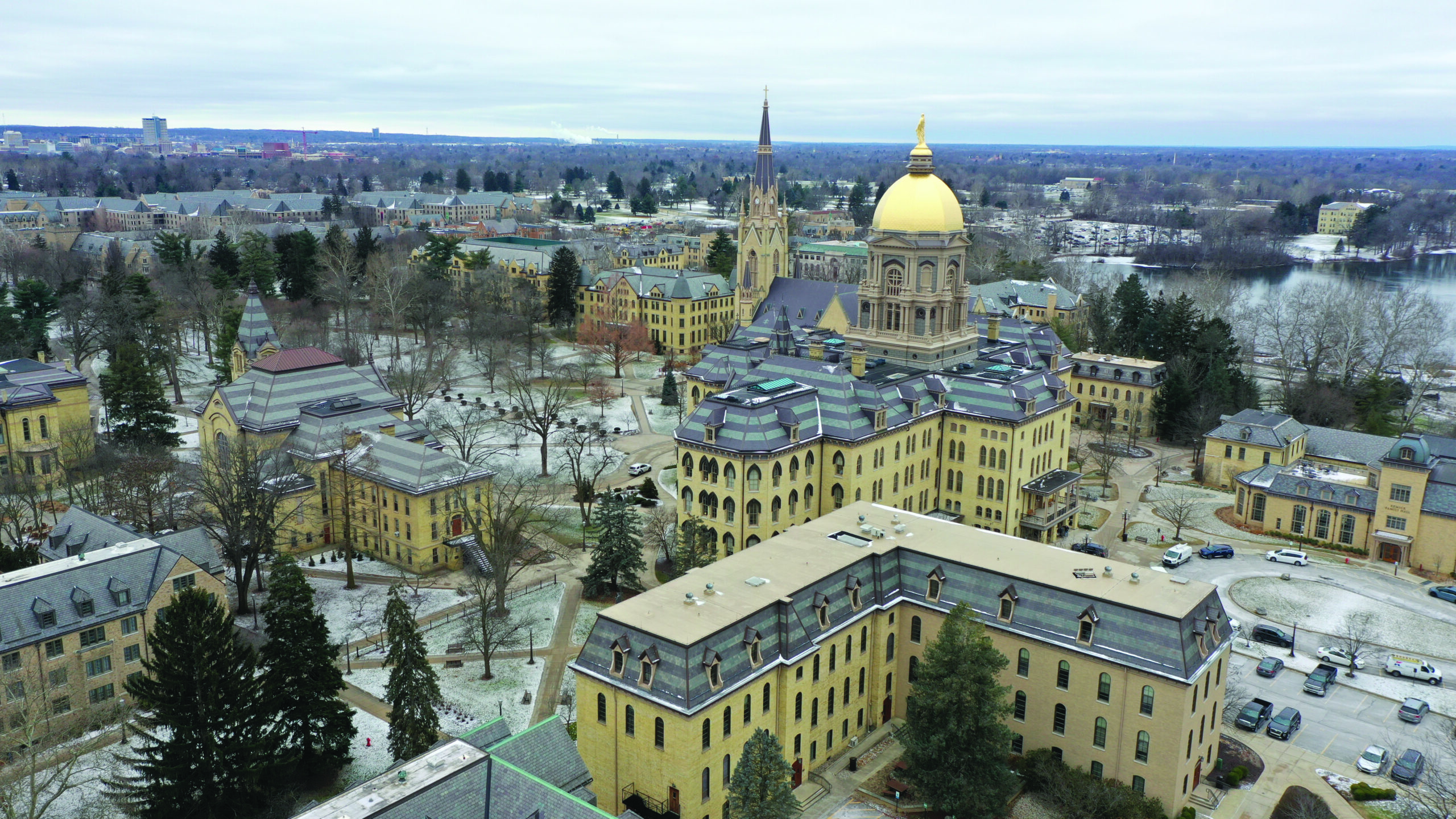
When “Standard” Roofs Fail, Building Owners Pay the Price
Before finding FiberTite, Notre Dame faced the same bind as many institutions: roofs that didn’t last. Cracks, leaks, and premature failures drove up costs and disrupted campus operations.
Polotto recalls the moment leadership drew a line in the sand: “My boss basically said, ‘Go find me a roof that’s been on a building for more than 20 years and is still performing.’ That was the mandate.”
The right solution wasn’t just about cost. Notre Dame wanted proven performance, with more than reliability suggested through a warranty document. They needed real evidence that a roof could last for decades.
Looking Beyond the Bid
Polotto’s team started with research, first to identify potential solutions, and then to learn how they were produced and how they performed in the field.
That study resulted in a visit to Seaman Corporation, where FiberTite single-ply roof membranes are produced.
“We saw how FiberTite was built, and the difference in the scrim and material was obvious,” Polotto said. “You can see and feel the difference in the fabric. It’s clear that it’s built to withstand the stresses of foot traffic, weathering, and puncture.”
It wasn’t just the construction quality that stood out. FiberTite also came with a proven track record, including installations that had been performing for decades. That history was the validation Notre Dame needed to move forward.
The Standard for Performance at Notre Dame
From that first FiberTite roof installation in 2005, performance over the next few years was so consistent that FiberTite quickly became the campus standard for low-slope roofing. What started as an experiment became the foundation of a long-term strategy that’s still paying off today.
More than twenty years later, and the results are clear. The university has installed approximately 2 million square feet of FiberTite membrane so far and has not experienced a single system failure. Maintenance has been minimal, limited to minor activities.
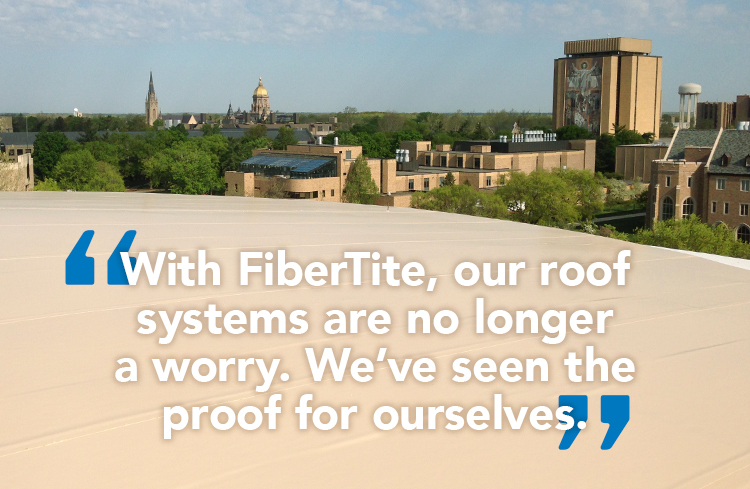
“With FiberTite, our roof systems are no longer a worry,” Polotto said. “We’ve seen the proof for ourselves, and there’s no looking back. It’s no surprise, Notre Dame is a big fan.”
A Roof That Pays Off Long After It’s Paid For
On paper, the investment in a FiberTite roof might be slightly more upfront than some alternatives. In practice, the university has saved millions by avoiding 20-year replacement cycles, reduced operational disruptions, and enabled more predictable long-term budgeting.
“For us, the numbers tell the story,” Polotto said. “No failures in 20 years, and a system capable of lasting twice as long as the alternatives. The life cycle savings are clear.”
Industry data backs up Notre Dame’s experience. A 2024 Mantis Innovation study confirmed that FiberTite consistently delivers the lowest total cost of ownership compared to TPO, EPDM, and PVC. Combined with resistance to fire, chemicals, punctures, and severe weather, the case for FiberTite is even more compelling.
The Lesson: Longevity Outlasts the Lowest Bid
Notre Dame’s experience proves that chasing the lowest price can cost more in the long run. By investing in proven performance, the university has avoided disruptive replacements, doubled the service life of its roofs, and gained greater control over budgets.
That performance has been matched by responsive service and support, giving the university confidence that needs will be addressed quickly if they arise. As Polotto said, “I know I can call FiberTite at any time and be greeted with arms wide open. It’s a true partnership.”
With its undeniable track record, FiberTite has become more than just a roofing solution for Notre Dame. It’s a strategic asset. For institutions facing similar challenges, the message is simple: prioritize longevity, and the returns will follow.
Calculate your potential long-term savings with the FiberTite TCO Calculator.