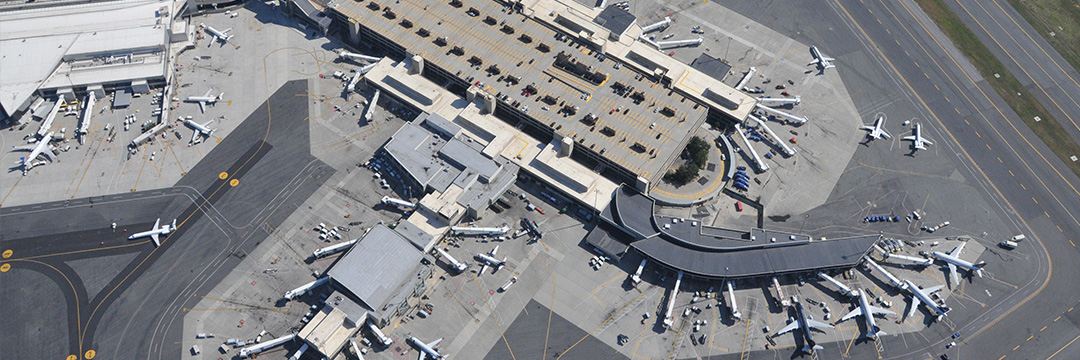
In airport buildings, roof maintenance and replacement decisions don’t often get appropriate attention until failure begins, and traveler behavior and perceptions are affected. A comfortable terminal supports a positive, on-schedule passenger experience. But when caution signs and active leaks appear, travelers do take notice.
Unexpected leaks can cause significant disruptions related to the cleanup and repair of facilities. In worst-case scenarios, they can impact the scheduling of timely departures and may ultimately damage an airport’s overall reputation among frequent travelers. While conversations about the airport experience often focus on concessions, wayfinding, security, and parking, building envelope performance also plays a fundamental role in traveler comfort, safety, and perception.
The roof is one of the most important parts of an airport’s building envelope. In this article, we’ll look at common causes of airport roof leaks and how high-performance roof systems can help protect infrastructure and support a positive traveler experience.
Learn About High-Performance Roof Systems for Airports
Consequences of Roof Leaks in Airport Buildings
First, consider what a leaking roof can mean for a busy airport. Even a relatively small, localized leak can have outsized consequences, including:
- Passenger safety hazards. Water infiltration can create slippery floors and lead to eroding and falling debris in concourses, gate areas, baggage claim, and other high-traffic spaces.
- Facility closures. Water intrusion may force airports to temporarily close restaurants, shops, restrooms, and other passenger facilities during cleanup and repairs.
- Poor passenger experience. Buckets, barriers, stained ceilings, and active leaks can make a terminal feel poorly maintained and leave travelers with a negative impression.
- Damage to critical systems. Water intrusion can threaten lighting, electrical infrastructure, communications equipment, security systems, signage, and other technology essential to terminal operations.
- Interior and structural damage. Persistent moisture can permanently damage ceilings, insulation, walls, flooring, and other building materials. It can also promote mold growth and deterioration in concealed areas of the building envelope.
Common Causes of Airport Leaks
Commercial roofs can be damaged in many ways, but airport structures face a unique threat: repeated exposure to jet fuel and aircraft exhaust.
Jet fuel residue, petroleum-based contaminants, and exhaust byproducts can interact with some roofing material technologies, potentially causing embrittlement, loss of flexibility, and other forms of deterioration over time. Commodity-grade roofing materials are more susceptible to these effects, which can lead to more frequent maintenance and repairs or premature failure. For these reasons, airport roofing projects typically require warranty coverage for damage caused by jet fuel and exhaust exposure. Many lower-quality roof systems exclude jet fuel exposure from their warranties.
Jet fuel isn’t the only threat airport roofs face. Terminals also house several food and beverage vendors, each with exhaust systems that expose the roof to animal fat residue and grease. These substances can also compromise commodity-grade roofing systems. In addition, terminals rely on extensive HVAC equipment to maintain interior comfort. Routine maintenance of this equipment brings regular foot traffic to the roof, making resistance to wear and tear essential.
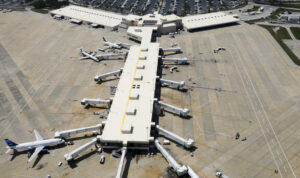
What to Look for in Airport Roofing
When evaluating roof systems for critical airport buildings, decision-makers have many options, but not all roof systems are created equal.
For example, thermoplastic polyolefin (TPO) is common in commercial roofing because of its low upfront cost and familiarity among contractors. TPO membranes can perform effectively, but their longevity may depend on formulation, environmental exposure, and operating conditions. Chemical exposure, rooftop traffic, and other stresses common in airport applications can increase the need for routine inspections and timely repairs.
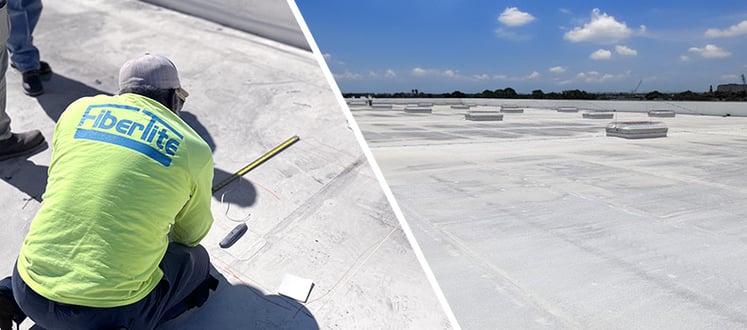
By comparison, high-performance membrane materials like ketone ethylene ester (KEE) can help reduce maintenance demands. FiberTite® Roof Systems leverage KEE membranes to retain flexibility and resist jet fuel exposure, chemicals, punctures, tears, and other stresses that can cause deterioration over time. For airport facilities, FiberTite can significantly reduce maintenance needs and support long-term performance.
One important distinction is that true, high-performance KEE membranes should meet ASTM D6754, which requires KEE to be more than 50% of the molecular weight of the membrane’s formulation. FiberTite meets these requirements, while most other membranes containing KEE do not.
Longevity is another key benefit for airport applications. Frequent maintenance can create operational headaches, especially given airports’ complex scheduling requirements. A low-maintenance roof that offers decades of anticipated service life can help reduce those disruptions.
When evaluating anticipated service life, specifiers can review a product’s environmental product declaration (EPD), which provides objective, third-party-verified information about environmental performance. FiberTite offers an industry-leading 40-year reference service life. Based on ISO 14025 (Type III) standards, EPDs support sustainable procurement, construction certifications such as LEED and BREEAM, and embodied carbon measurement. They can also provide reference service life data, helping specifiers weigh environmental impact alongside long-term performance.
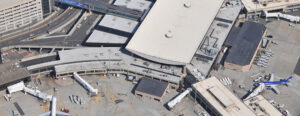
An excellent passenger experience depends on many factors. A high-performance roof system is one of them, helping reduce the risk of leaks and the safety hazards, disruptions, and reputational damage they can cause.
Want to learn more about high-performance roof systems for airports? The FiberTite team is ready to help. Discover why FiberTite Roof Systems are built for the unique demands of airport facilities. Contact the FiberTite Team
_width-790_height-444_name-thumbnail_image2 (1).jpg.jpg)